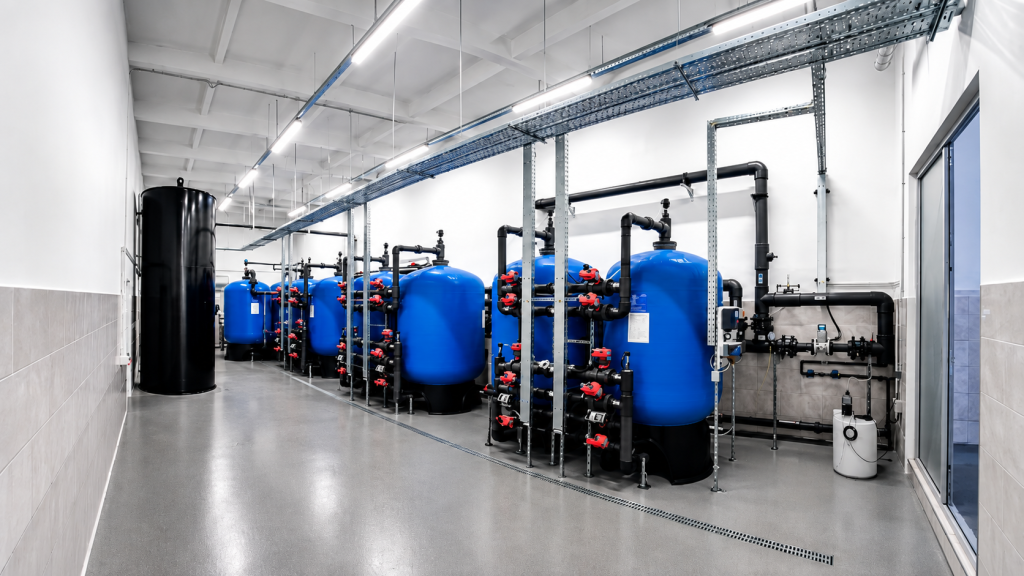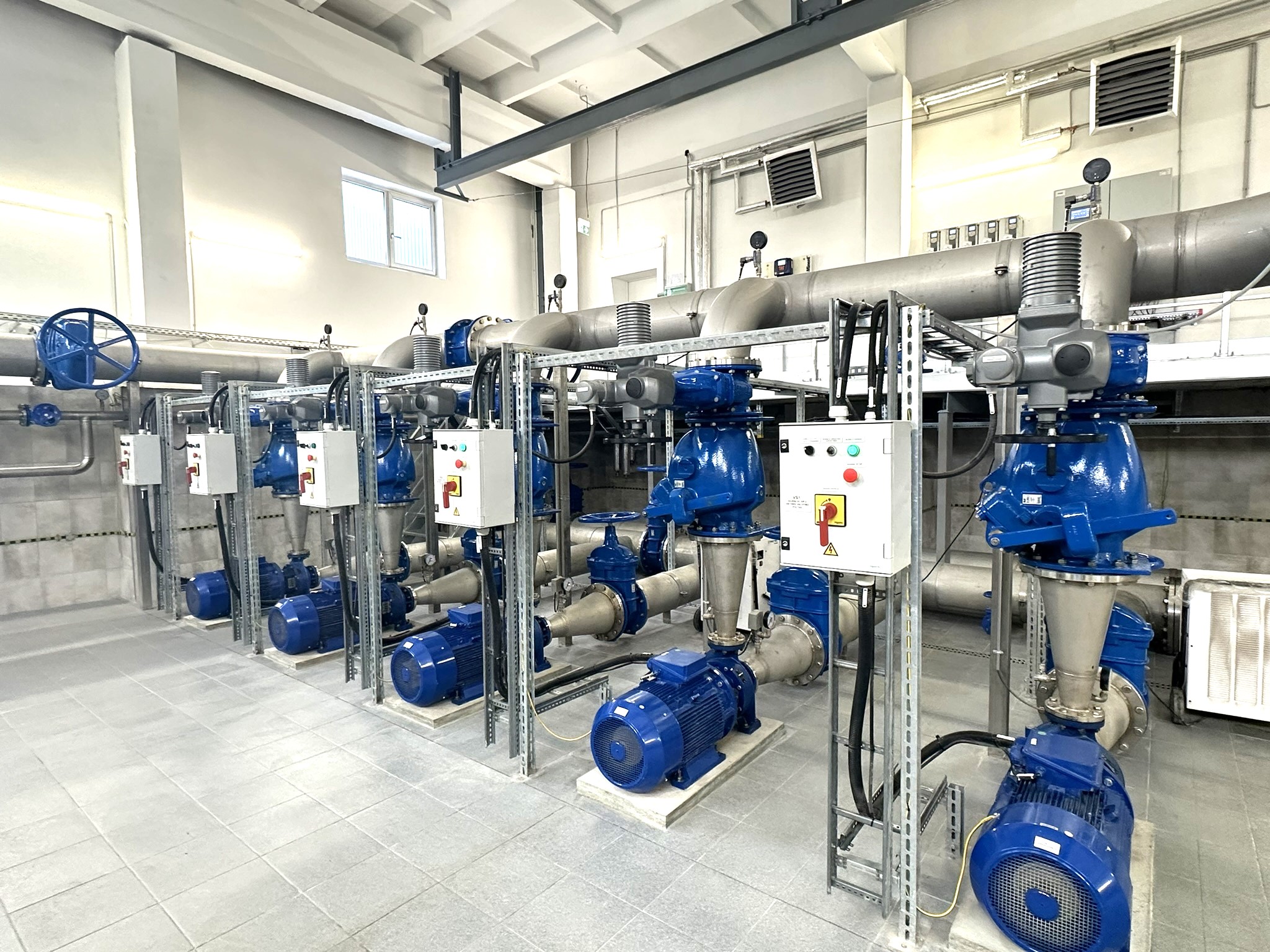
The main objectives and requirements of the project were to ensure compliance with Lithuanian Hygiene Standard HN 24:2023, “Drinking Water Safety and Quality Requirements,” and to achieve a maximum water treatment capacity of 340 m³/h.
Following the reconstruction, groundwater extracted from the wells is aerated in three aerators. During the aeration process, a sufficient amount of oxygen is dissolved in the groundwater to support the biological removal of impurities.
The aerated water is then directed to four newly refurbished open filters, each operating independently. The water passes through a sand filter bed, where a biofilm forms and retains the oxidation products of iron and manganese.
After filtration, the treated water is collected in a manifold and flows by gravity into two treated water storage tanks. Along the way, the water is disinfected using a sodium hypochlorite solution produced on-site by an electrolysis unit.
From the treated water storage tanks, the water flows by gravity to a newly installed pumping station, where secondary-stage pumps deliver it to consumers.